
Description
GHRP-2 Peptide | Buy GHRP-2 UK | Growth Hormone Releasing Peptide-2 | Research Use Only
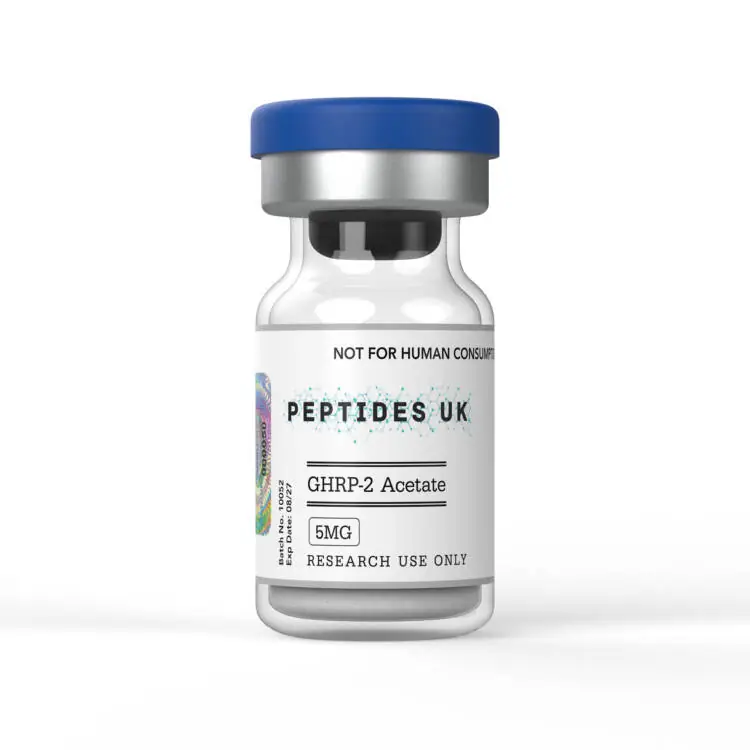
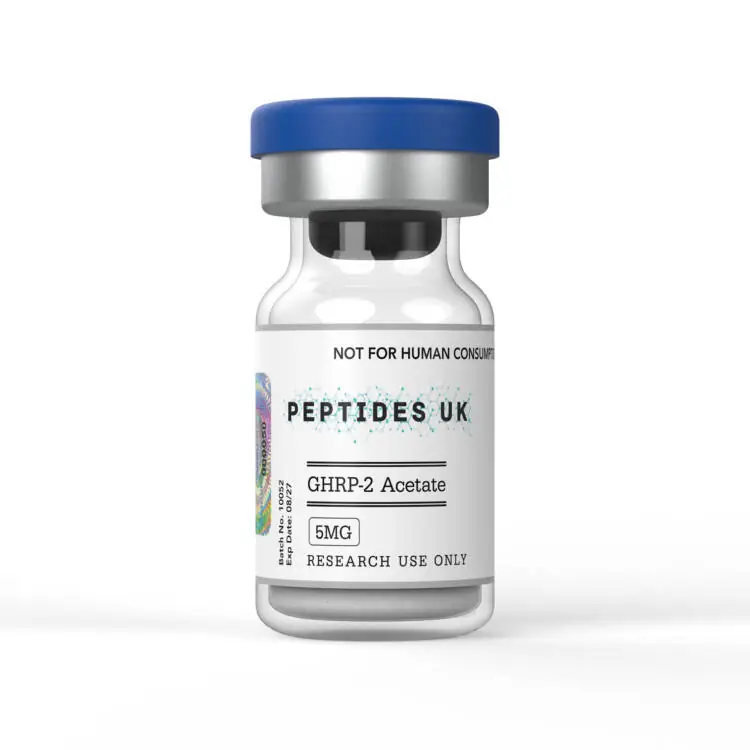
GHRP-2 (D-Ala-D-βNal-Ala-Trp-D-Phe-Lys-NH₂) is a synthetic hexapeptide and one of the most potent members of the GHRP class — a second-generation GH secretagogue developed as a higher-efficacy successor to the founding peptide GHRP-6. It is studied in laboratory research for its potent GHS-R1a agonism, dual GHS-R1a and CD36 receptor pharmacology, GH and IGF-1 secretion, cardioprotective signalling, cytoprotective pathway activation, anti-fibrotic biology, and hypothalamic-pituitary-adrenal axis interaction — making it one of the most pharmacologically active GHRP-class peptides in the research literature. Buy GHRP-2 in the UK from Peptides Lab UK with >99% HPLC-verified purity, batch-specific COA, and fast UK dispatch for laboratory and in vitro research use only.
Distributed by Peptides Lab UK in a high-purity lyophilised format, for laboratory research use only. This compound is handled in controlled settings for in vitro and pre-clinical studies, with no applications in human or veterinary medicine. Each batch undergoes rigorous quality analysis to ensure >99% purity (HPLC verified).
What Is GHRP-2?
GHRP-2 is a synthetic hexapeptide with the sequence D-Ala-D-βNal-Ala-Trp-D-Phe-Lys-NH₂, developed as a second-generation GHRP following the characterisation of GHRP-6 by Bowers et al. in the 1980s. GHRP-2 was specifically designed to deliver greater GHS-R1a binding potency and enhanced GH-releasing efficacy relative to the founding GHRP-6, while retaining the hexapeptide structural scaffold. It is among the most extensively studied GH secretagogues in the class alongside Hexarelin, with whom it shares comparable potency at the GHS-R1a receptor.
Like all GHRPs, GHRP-2 binds both the ghrelin receptor (GHS-R1a) and the CD36 scavenger receptor, conferring a bifurcated pharmacological profile that encompasses GH axis biology and a range of cytoprotective, anti-inflammatory, and anti-fibrotic activities independent of the GH axis. GHRP-2 is notable for producing significant ACTH and cortisol co-release — a feature shared with GHRP-6 and Hexarelin and absent from the more selective Ipamorelin — making it a valuable research tool for studying HPA axis interactions with the ghrelin receptor system at high GHS-R1a stimulation levels.
As a research compound, GHRP-2 occupies a key position in the GHRP class as the high-potency, second-generation reference peptide — used in comparative studies against GHRP-6, Ipamorelin, and Hexarelin, and extensively published across GH axis biology, IGF-1 regulation, pituitary pharmacology, cardioprotection, and cytoprotective pathway research.
How Does GHRP-2 Work?
GHRP-2’s pharmacology is bifurcated across two distinct receptor systems — the ghrelin receptor (GHS-R1a) and the CD36 scavenger receptor — each mediating independently meaningful biological activities.
GHS-R1a Receptor Activation — Enhanced GH Axis Potency
GHRP-2 activates GHS-R1a via phospholipase C/diacylglycerol/PKC signalling, mobilising intracellular calcium in anterior pituitary somatotrophs to trigger GH vesicle fusion and exocytosis. GHRP-2 binds GHS-R1a with greater affinity than GHRP-6, producing a more robust GH secretory response in both in vitro and in vivo models. This enhanced potency at the receptor level, combined with a peptide half-life superior to GHRP-6, makes GHRP-2 the preferred reference compound in research models requiring maximal pituitary GHS-R1a activation. GHRP-2 also acts as a functional somatostatin antagonist at the pituitary level and promotes endogenous GHRH release at the hypothalamic level, contributing to its synergistic GH-releasing profile when combined with GHRH analogues.
GHRH Co-Dependency for Maximal GH Release
In common with GHRP-6, GHRP-2’s maximal GH-releasing activity depends in part on the availability of endogenous GHRH. Studies demonstrate that GHRP-2 functions both as a direct pituitary GHS-R1a agonist and as an indirect promoter of hypothalamic GHRH release — a dual mechanism shared by the GHRP class that distinguishes these peptides from GHRH analogues alone and underlies the scientific rationale for GHRH + GHRP combination research models. GHRP-2 exhibits partial GHRH co-dependency, with evidence suggesting slightly less GHRH-dependence than GHRP-6 at equivalent doses.
CD36 Receptor Binding — Cytoprotective and Anti-Fibrotic Activity
GHRP-2 binds CD36 and activates the same downstream prosurvival pathways documented for GHRP-6: PI-3K/AKT1 activation reducing cellular death; anti-fibrotic effects via PPARγ upregulation followed by TGF-β, CTGF, and PDGF downregulation; anti-inflammatory effects via NFκB blunting; and cell survival via HIF-1α induction. These CD36-mediated effects are independent of GHS-R1a and contribute substantially to GHRP-2’s cardioprotective and cytoprotective activity in pre-clinical models.
ACTH and Cortisol Co-Release — HPA Axis Interaction
GHRP-2 produces significant ACTH and cortisol co-release alongside GH stimulation — a pharmacological profile shared with GHRP-6 and Hexarelin but absent from Ipamorelin. This HPA axis co-stimulation is dose-dependent and has been characterised in both healthy subjects and patient populations, including studies in children with idiopathic short stature undergoing GH stimulation testing. The ACTH/cortisol co-release profile makes GHRP-2 a valuable research tool for studying hypothalamic-pituitary-adrenal axis interactions with the ghrelin receptor system at elevated GHS-R1a stimulation levels, and clearly distinguishes its pharmacological profile from that of the more selective Ipamorelin.
IGF-1 Upregulation and Pituitary Somatotroph Biology
GHRP-2 stimulates pituitary GH secretion that drives hepatic and peripheral IGF-1 production in a manner consistent with the broader GHRP class. Pre-clinical studies have characterised GHRP-2’s ability to elevate serum IGF-1 following repeated administration, with evidence from both animal models and human clinical research. GHRP-2’s robust GHS-R1a activity makes it a preferred reference compound for in vitro somatotroph biology, GH vesicle exocytosis studies, and GH/IGF-1 axis research models requiring maximal receptor stimulation.
What Does GHRP-2 Do in Research?
In laboratory and pre-clinical settings, GHRP-2 has been studied across a broad range of biological systems, with particular depth in GH axis pharmacology, pituitary biology, and cardioprotective research. Research has examined its role in:
GHS-R1a receptor binding, phospholipase C/calcium signalling, and GH vesicle exocytosis studies — high-potency reference agonist GH and IGF-1 axis stimulation — enhanced potency relative to GHRP-6 and Ipamorelin ACTH and cortisol co-stimulation — hypothalamic-pituitary-adrenal axis interaction with the ghrelin receptor Pituitary somatotroph biology — GH secretory capacity, somatostatin antagonism, and GHRH co-dependency pharmacology CD36 scavenger receptor binding, PI-3K/AKT1 prosurvival pathway activation, and HIF-1α induction Cardiac protection — ischaemia/reperfusion injury, dilated cardiomyopathy, and doxorubicin-induced cardiotoxicity models Anti-fibrotic pathway research — PPARγ upregulation, TGF-β1 and CTGF transcriptional suppression Cytoprotective biology across cardiac, neuronal, and hepatic cell models Idiopathic short stature and GH deficiency — reference peptide for GH stimulation test research models GHRP class comparative pharmacology — reference compound for SAR studies against GHRP-6, Ipamorelin, and Hexarelin
GHRP-2 and Cardioprotection Research
GHRP-2 has demonstrated cardioprotective activity in pre-clinical models through its dual GHS-R1a and CD36 receptor pharmacology. CD36 binding activates PI-3K/AKT1 prosurvival pathways and reduces oxidative stress in cardiomyocytes, with evidence from ischaemia/reperfusion models confirming that GHRP-2 attenuates cardiomyocyte death and preserves left ventricular function. The CD36-mediated component of GHRP-2’s cardioprotection is mechanistically consistent with the extensively characterised cardioprotective activity of GHRP-6 and Hexarelin, with whom GHRP-2 shares the CD36 pharmacophore scaffold. Research has also examined GHRP-2’s potential to reduce doxorubicin-induced cardiotoxicity, with cardioprotective mechanisms including preservation of mitochondrial physiology and reduction of reactive oxygen species contributing to the observed protective effects.
GHRP-2 and Anti-Fibrotic Pathway Research
Via CD36 receptor binding, GHRP-2 activates PPARγ-mediated antagonism of TGF-β1 signalling — the same anti-fibrotic mechanism documented for GHRP-6 in wound healing and hypertrophic scar models. This pathway — involving PPARγ upregulation and consequent downregulation of TGF-β1, CTGF, and PDGF — positions GHRP-2 as a research tool for studying CD36-mediated anti-fibrotic biology alongside GHRP-6, with GHRP-2’s higher GHS-R1a potency enabling comparative research models where dual GHS-R1a/CD36 stimulation intensity is a variable. Pre-clinical data confirm that TGFB1 and CTGF expression are significantly reduced and PPARγ expression significantly elevated by CD36-binding GHRPs, with GHRP-2 included in this mechanistic framework.
GHRP-2 and Idiopathic Short Stature Research
GHRP-2 has been studied as a GH stimulation agent in children with idiopathic short stature and growth hormone deficiency, with clinical research confirming robust GH and IGF-1 responses alongside ACTH and cortisol co-release. These studies have established GHRP-2 as a reference GH stimulation peptide in paediatric endocrinology research contexts, and have documented the neuroendocrine response profile of GHS-R1a stimulation in growth-restricted subjects — contributing to the scientific literature on the ghrelin receptor’s role in growth axis regulation. GHRP-2 test doses in these research contexts have provided comparative pharmacokinetic and pharmacodynamic benchmarks for the GHRP class.
GHRP-2 and Pituitary Somatotroph Biology
GHRP-2’s high GHS-R1a affinity and enhanced receptor efficacy make it a preferred reference compound for in vitro studies of pituitary somatotroph GH secretory biology. Research using GHRP-2 has characterised GHS-R1a intracellular signalling dynamics — including PLC activation, DAG/PKC cascades, and calcium-dependent GH vesicle exocytosis — at stimulus intensities not achievable with GHRP-6 or Ipamorelin at equivalent concentrations. This makes GHRP-2 particularly valuable in receptor occupancy, receptor desensitisation, and maximal GH secretory capacity research models.
What Do Studies Say About GHRP-2?
GHRP-2 has an extensive published research profile spanning more than three decades, with peer-reviewed literature covering GH axis pharmacology, pituitary biology, cardioprotection, HPA axis interaction, and comparative GHRP pharmacology.
GHRP-2 as a High-Potency GHS-R1a Reference Agonist
Multiple comparative studies have confirmed that GHRP-2 produces greater GH secretory responses than GHRP-6 at equivalent doses, establishing it — alongside Hexarelin — as one of the most potent GHRP-class GHS-R1a agonists in the pre-clinical and clinical research literature. This enhanced potency reflects a higher GHS-R1a binding affinity resulting from GHRP-2’s optimised hexapeptide structure incorporating D-βNal in place of GHRP-6’s D-Trp, and positions GHRP-2 as the reference compound of choice when maximal GHS-R1a activation is the research objective.
GHRP-2 and the HPA Axis Research Profile
Studies comparing GHRP-2’s neuroendocrine profile with that of GHRP-6, Ipamorelin, and GHRH have confirmed that GHRP-2 produces robust ACTH and cortisol co-release alongside GH stimulation — a profile mechanistically consistent with the ghrelin receptor’s known expression in the HPA axis and shared with GHRP-6 and Hexarelin but absent from Ipamorelin. This characterised HPA co-stimulation profile establishes GHRP-2 as the appropriate research tool when combined GHS-R1a activation and HPA axis interrogation is the experimental objective, and confirms that the selective profile introduced by Ipamorelin represents a deliberate pharmacological refinement from the broader GHRP-2 and GHRP-6 reference.
GHRP-2 Cytoprotective Evidence Base
As a confirmed CD36 ligand with established PI-3K/AKT1 and PPARγ pathway activity, GHRP-2 belongs to the cytoprotective GHRP subclass — compounds that exhibit prosurvival, anti-inflammatory, and anti-fibrotic properties across cardiac, neuronal, and hepatic cell types via their dual GHS-R1a/CD36 pharmacology. The peer-reviewed literature on GHRP-class cytoprotection encompasses GHRP-2 as a high-potency member of this pharmacological framework, with cardioprotective studies specifically documenting CD36-dependent mechanisms consistent across the GHRP-2, GHRP-6, and Hexarelin subclass.
GHRP-2 as a Comparative Pharmacology Reference
GHRP-2 occupies a key position in GHRP class SAR research as the second-generation, high-potency hexapeptide against which the structural modifications introducing Ipamorelin’s selectivity (Aib-His pentapeptide with D-2-Nal) and Hexarelin’s extreme potency (His-D-2-MeTrp scaffold) can be benchmarked. Comparative studies using GHRP-2 as reference have generated fundamental insights into GHS-R1a pharmacophore requirements for potency, selectivity, and HPA axis co-stimulation — findings that underpin rational peptide drug design across the GH secretagogue field.
Key cited studies:
Bowers CY et al. (1994) — Structure-Activity Relationships of a Synthetic Hexapeptide That Specifically Releases GH in Vitro and in Vivo — Endocrinology 134(5):1974–1983. DOI: 10.1210/endo.134.5.8156994 Arvat E et al. (1997) — Comparative Effects of GHRP-2, GHRP-6, and Hexarelin on GH, ACTH, and Cortisol — J Clin Endocrinol Metab 82(8):2439–2444. PubMed ID: 9253315 Berlanga-Acosta J et al. (2017) — Synthetic Growth Hormone-Releasing Peptides: A Historical Appraisal of Cytoprotective Effects — PMC5392015 Deghenghi R et al. (1998) — Comparison of GH-Releasing Activity of GHRP-2 and Hexarelin in Children with Idiopathic Short Stature — PubMed ID: 9658369 Proulx C et al. (2020) — Azapeptide Modulators of CD36 for Atherosclerosis and Cardioprotection — PMC7432381 Muller EE et al. (1999) — GH-Releasing Peptides and Their Interaction with Ghrelin and the Hypothalamus — Endocr Rev 20(2):189–220. PubMed ID: 10204116
GHRP-2 vs Other GHS-R1a Research Peptides
Feature GHRP-2 GHRP-6 Ipamorelin Hexarelin Sequence D-Ala-D-βNal-Ala-Trp-D-Phe-Lys-NH₂ (6aa) His-D-Trp-Ala-Trp-D-Phe-Lys-NH₂ (6aa) Aib-His-D-2-Nal-D-Phe-Lys-NH₂ (5aa) His-D-2-MeTrp-Ala-Trp-D-Phe-Lys-NH₂ (6aa) GHS-R1a Activity More potent than GHRP-6 Potent (founding reference) Potent (most selective) Most potent classic GHRP CD36 Binding Yes (confirmed) Yes (confirmed) Not established Yes (confirmed) ACTH/Cortisol Release Yes (significant) Yes (significant) No (selective GH only) Yes (significant) GHRH Co-Dependency Partial Yes (82% of GH response) Partial Partial GI Motility Research Limited Yes (motilin receptor interaction) Not established Limited Cardioprotection Research Moderate Extensive None Extensive Wound Healing Research None established Published (PPARγ/TGF-β) None None CD36 Drug Discovery Secondary scaffold Primary scaffold None Secondary Historical Significance High-potency second-generation GHRP Discovery peptide (led to ghrelin) First selective GHRP Most potent classic GHRP
GHRP-2’s combination of enhanced GHS-R1a potency relative to GHRP-6, confirmed CD36 pharmacology, significant HPA axis co-stimulation, and role as a second-generation comparative reference compound makes it an essential research tool for GH axis biology, pituitary pharmacology, and cytoprotective pathway research — occupying a distinct niche from the selective Ipamorelin (no HPA co-stimulation, no CD36), the more extensively CD36-characterised GHRP-6 (lower GHS-R1a potency), and the extremely potent Hexarelin (more restricted research application).
Quality & Purity Assurance
Every batch of GHRP-2 from Peptides Lab UK is:
99% pure — HPLC and mass spectrometry verified Supplied with a full Certificate of Analysis (COA) on request Lyophilised powder for maximum stability and long shelf life Manufactured under strict, controlled laboratory conditions Consistent batch-to-batch quality for reproducible research results
Buy GHRP-2 UK — Product Specifications
Property Detail Full Name Growth Hormone Releasing Peptide-2 Sequence D-Ala-D-βNal-Ala-Trp-D-Phe-Lys-NH₂ Amino Acids 6 Molecular Weight 817.94 g/mol Molecular Formula C₄₅H₅₅N₉O₆ Receptor Targets GHS-R1a (primary) + CD36 (secondary) Purity >99% (HPLC verified) Form Lyophilised powder Storage Store dry at -20°C; protect from light Solubility Bacteriostatic water, sterile water, or suitable laboratory solvents
GHRP-2 Research Applications
GHRP-2 peptide UK is supplied strictly for the following in vitro and pre-clinical research uses:
GHS-R1a receptor binding, phospholipase C/calcium signalling, and GH vesicle exocytosis studies — high-potency reference agonist GH and IGF-1 axis stimulation, GHRH co-dependency pharmacology, and pituitary somatotroph biology research ACTH and cortisol co-stimulation — hypothalamic-pituitary-adrenal axis interaction with the ghrelin receptor CD36 scavenger receptor binding, PI-3K/AKT1 prosurvival pathway activation, and HIF-1α induction studies Cardiac protection — ischaemia/reperfusion injury, dilated cardiomyopathy, and doxorubicin cardiotoxicity models Anti-fibrotic pathway research — PPARγ upregulation, TGF-β1 and CTGF transcriptional suppression Cytoprotective biology — cardiac, neuronal, and hepatic cell survival pathway research Idiopathic short stature and GH deficiency — GH stimulation test research models Receptor desensitisation and GH secretory capacity studies — maximal GHS-R1a activation models GHRP class comparative pharmacology — reference compound for SAR studies against GHRP-6, Ipamorelin, and Hexarelin
Why Buy GHRP-2 from Peptides Lab UK?
Peptides Lab UK is a trusted UK peptides supplier, providing research-grade compounds verified by independent HPLC testing. When you buy GHRP-2 in the UK from us, you receive:
99% purity, HPLC and MS verified, third-party tested Full COA documentation per batch Fast same-day UK dispatch with tracked delivery Competitive pricing with bulk research discounts available Trusted by researchers across the UK and Europe
Reviews
There are no reviews yet.