
Description
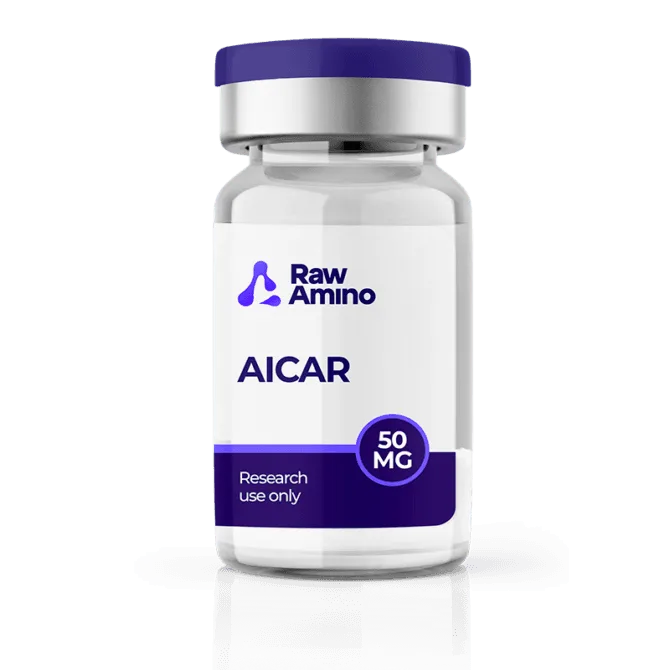
AICAR, also known as 5-aminoimidazole-4-carboxamide ribonucleotide, is a synthetic analog of adenosine monophosphate. It has been studied as an activator of AMP-activated protein kinase (AMPK), a regulatory enzyme present in tissues such as skeletal muscle, liver, and brain. AMPK has been associated with cellular pathways that influence lipid synthesis, cholesterol formation, ketone production, glucose regulation, and fatty acid metabolism.
Alternative Names: Z-nucleotide, 5-amino-4-imidazolecarboxamide ribotide, 5′-Phosphoribosyl-5-amino-4-imidazolecarboxamide
AICAR Studies and Research Data
Investigations on Heart Function
Research has explored whether AICAR may help regulate cardiac response under conditions of reduced oxygen supply. Experimental work in animal models suggested that AICAR could potentially suppress vascular smooth muscle growth and reduce inflammatory activity associated with cholesterol buildup. Some studies proposed that AICAR may influence myocardial glycogen breakdown through AMPK-related pathways, without noticeably altering glycogen synthesis. Other findings indicated that AICAR might increase levels of an intracellular form called ZMP, which could play a role in glycogen metabolism.
Research on Insulin Sensitivity and Metabolic Pathways
In murine models, AICAR has been linked with potential improvements in glucose regulation and lipid balance. It has been suggested to enhance muscle glucose uptake in ways similar to physical activity, possibly through upregulation of glucose transport proteins. Long-term studies in diabetic-prone models indicated that regular exposure to AICAR or exercise was associated with preserved insulin responsiveness and protection against hyperglycemia. Some experiments also pointed to possible preservation of pancreatic beta-cell morphology under these conditions.
AICAR Studies on Inflammation
Animal and cellular research has examined AICAR for its possible impact on inflammatory processes. Findings suggested that AMPK activation by AICAR may contribute to reduced markers of inflammation in conditions such as colitis, hepatitis, lung injury, and vascular stress. Laboratory work also explored how AICAR may interact with signaling proteins such as atypical protein kinase C (aPKC) and ERK in muscle cells, indicating that glucose transport stimulation might involve multiple signaling networks.
Observations in Cancer Research
Laboratory and animal studies have investigated whether AICAR may influence cancer cell survival. Findings indicated that prolonged exposure could reduce cancer cell proliferation and, in some cases, trigger programmed cell death through pathways involving caspase activation. In thyroid and B-cell leukemia research, AICAR was suggested to induce apoptosis independently of p53 activity. These effects appeared to depend on the intracellular conversion of AICAR to ZMP, which may interact with AMPK signaling.
Explorations in Fertility Studies
In male murine models, AMPK activation by AICAR was suggested to support sperm motility and function. This has raised interest in whether AMPK-related pathways may influence reproductive potential, though findings remain limited to experimental models.
Conclusion
Research on AICAR has spanned diverse areas, including metabolism, cardiac function, inflammation, oncology, and reproduction. Many studies suggest that its interaction with AMPK pathways may play a central role in these findings. While animal and cell-based investigations point to promising directions, the data remain preliminary, and future work is required to clarify mechanisms and outcomes.


Reviews
There are no reviews yet.